
Project Description
Ferndale Street, Faringdon. Rigid inclusions as a foundation solution to protect neighbouring buildings.
SWJ Consulting were asked to design the foundations for a small housing development in Faringdon. At the front of the plot was an existing semi-detached building with a proposed new build for flats at the rear, where part of the ground floor included columns to create covered parking spaces.
The site itself was bordered by much older neighbouring buildings that had just been built onto the ground and had no foundations. There was only approx. 1.3m clearance between the proposed new build and the neighbouring structures so we had to be very careful with our foundation solutions ensuring we didn’t undermine these older buildings.
When the site and soil investigation was completed, it was discovered that there was solid strata approximately 2m below ground level, and there was also an unused well right on the boundary of the property. If we went with traditional trench foundations to reach the solid strata the excavation would likely collapse and undermine the adjacent older brick buildings. The drilling and vibration caused by installing pile foundations might also undermine the neighbouring buildings.
We needed a solution that would allow us to keep the foundations as high as possible, but the existing capacity of the soil would not allow this, so the best option available to us was rigid inclusions.
Rigid inclusions are similar to pile foundations in that they are vertical columns, made of robust materials, that are used to replace excavated soil from weak ground to improve its load-bearing capacity. Unlike a piled foundation, rigid inclusions do not transfer loads instead they are used to compact, reinforce and strengthen the existing soil, helping to distribute any additional weight more effectively. In addition, this method involves less soil displacement, concrete and steel than piling.
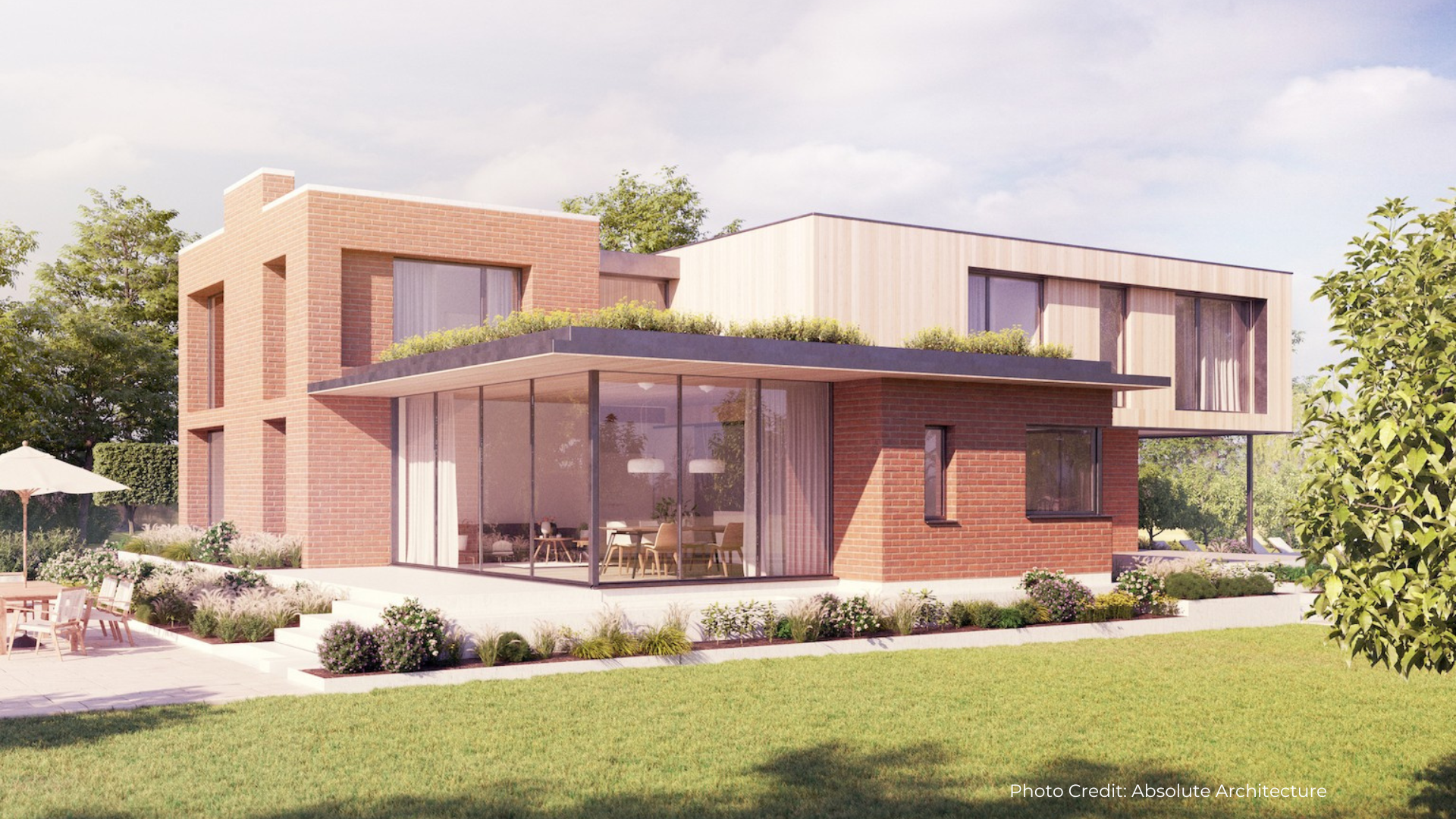
Title image is for illustration purposes only.
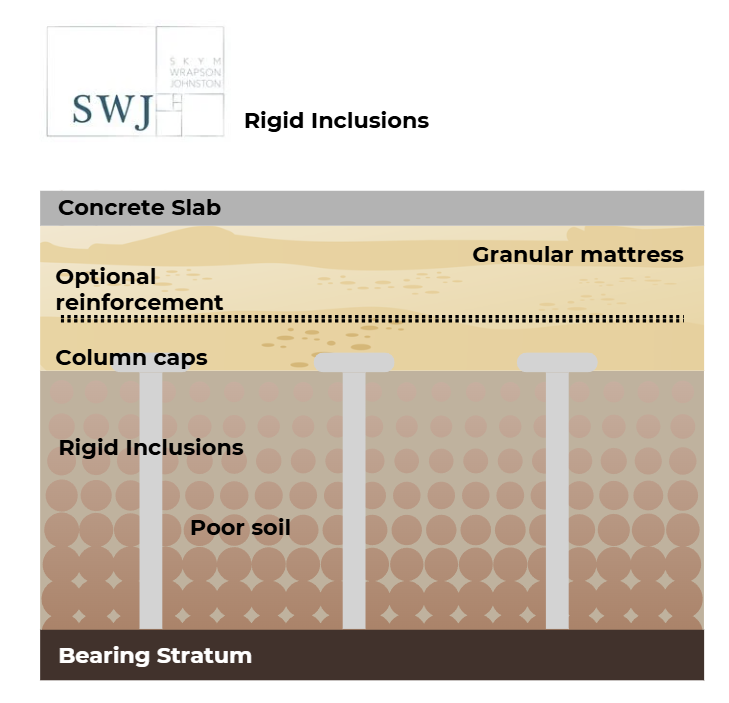
On this project the rigid inclusion columns were dug to a depth of 5m. We then created a platform with 500mm-600mm of granular material to further distribute the load and create a platform for the new build.
SWJ Consulting consider rigid inclusions to be an efficient ground improvement solution where the soil requires improvement. It is more cost-effective and sustainable and can be used for a range of different types of projects and soil types.
If you have a project with poor soil conditions and are looking for effective and efficient foundation solutions then give the SWJ Consulting team a call on (Witney) 01993 225085 or (Southampton) 02381 920656 or email mail@swjconsulting.co.uk for an informal chat.