Project Description
The importance of clear communication on large-scale residential developments with a strong architectural vision.
Welborne Garden Village is a major new residential development in Hampshire which, when complete, will deliver more than 6,000 homes alongside community and mixed-use facilities. The scheme is currently in its initial phase, with three housing developers involved: Thakeham, CG Fry, and Pye Homes. SWJ Consulting are working closely with Pye Homes on their portion of Phase One, which comprises 210 individual plots.
One of the principal challenges on the project has been the ground conditions, which require careful consideration to ensure long-term structural performance and durability. You can read more about this here.
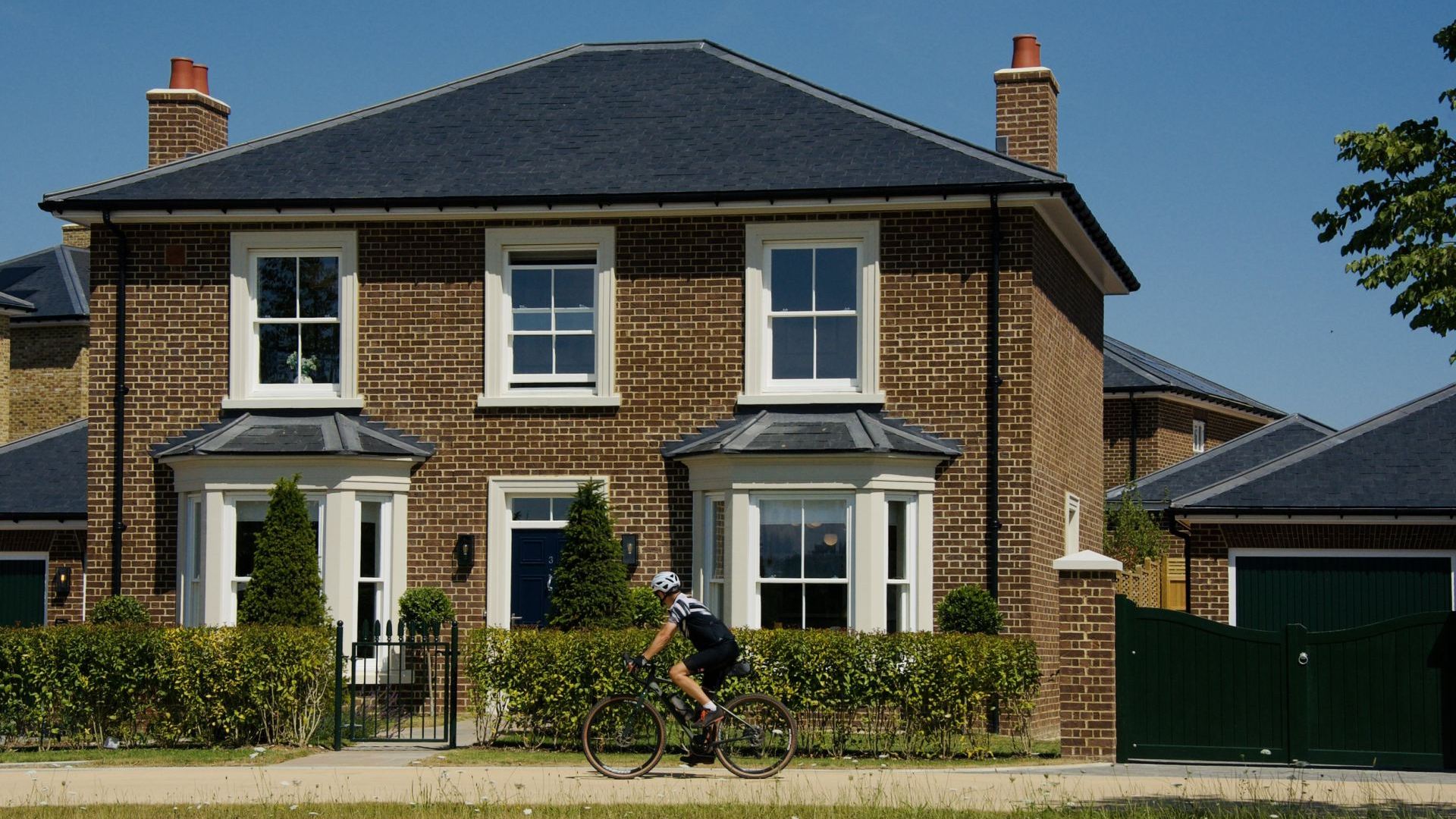
The technical constraints of the site are only part of the story. The master architect for the wider development has a very clear and carefully curated vision for how Welborne should look and feel as a place to live. The scheme draws inspiration from Poundbury, an experiment in urban planning championed by King Charles III in Dorchester. The aim was to create a walkable, attractive, mixed-use community that blends traditional architecture and historic character with the practical demands of modern living.
From a structural engineering perspective, this meant balancing our technical requirements with the architect’s strong aesthetic vision. A particular area of concern was the positioning of movement joints. These vertical joints are essential in masonry buildings to accommodate thermal movement and shrinkage of the masonry. Ordinarily, we would hide them behind rainwater pipes, minimising their visual impact. In this case, the architectural layout initially conflicted with that approach, so close collaboration was required. Through detailed discussion, we agreed minor adjustments—such as repositioning rainwater pipes by approximately 100mm—to allow the movement joints to be concealed without compromising the overall appearance of the buildings.
Another defining aspect of the development is the deliberate variation in house types, so the masterplan avoids repetition. While many of the houses may appear similar at first glance, there are numerous variations between the plots to give dwellings individuality. These variations can have a significant structural impact, affecting elements such as lintel specifications, lateral stability, wind post locations, movement joint spacing, and internal loadbearing requirements.
So, the challenge on this project has not been complex structural engineering in isolation, but rather coordination, organisation, and rigorous control of information. Managing multiple house types, each with small but important differences, required robust tracking processes and close collaboration with the wider design team. The project highlights the importance of clear communication and structured engineering input when delivering large-scale residential developments with a strong architectural vision.

Project Team
Client: Pye Homes
Architect: Eric Cole Ltd
Landscape Architect: Deacon Design
Civil Engineers: Abley Letchford Partnership Ltd