Project Description
Adaptive engineering solutions to extend existing educational facilities
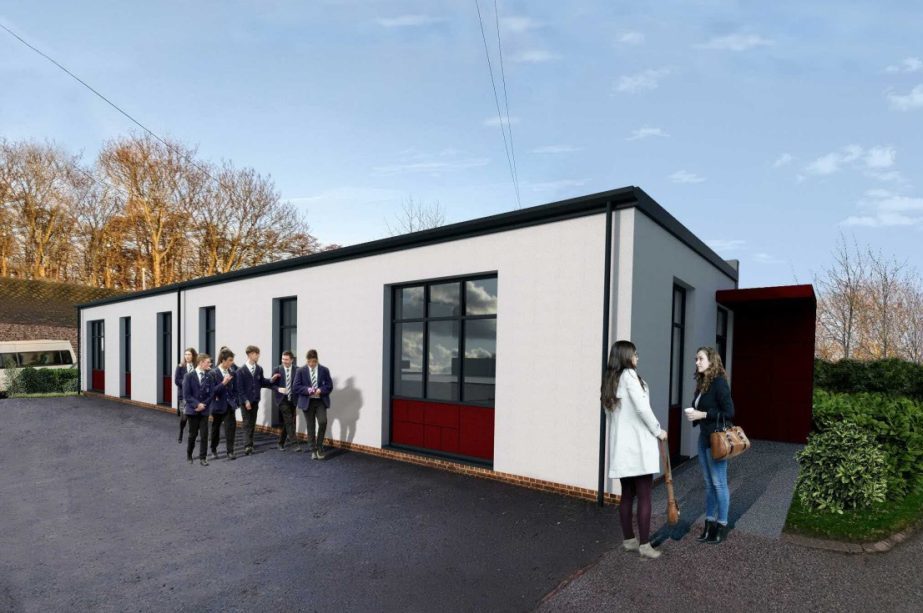
Bohunt School is a mixed 11–18 state school with a sixth form, originally completed in 2016. We were appointed to design a new sixth form block that would integrate seamlessly with the existing campus, both architecturally and structurally, while meeting the enhanced safety and performance requirements associated with school buildings.
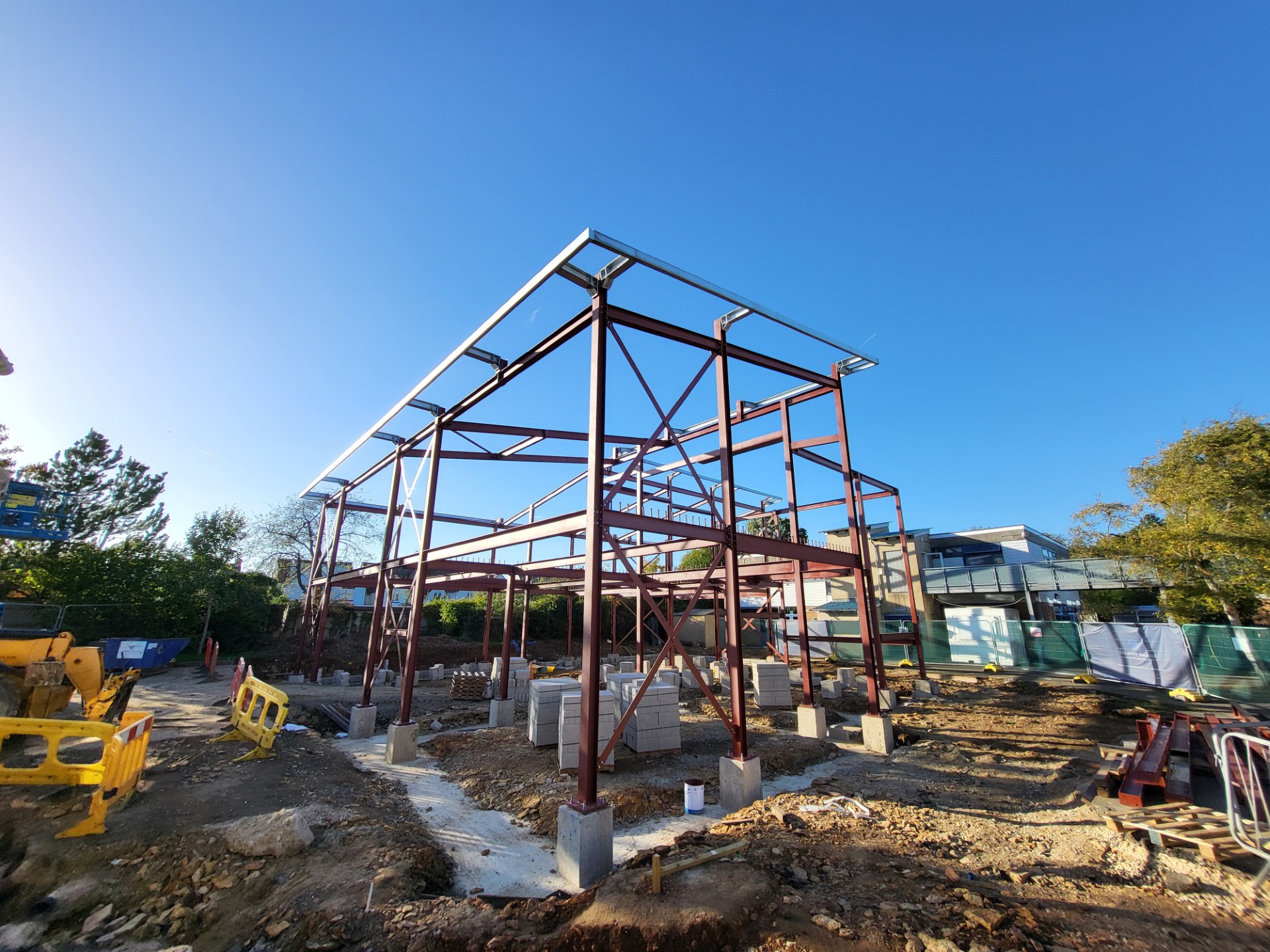
To align with the existing construction and programme requirements, a steel frame structure with pre-cast concrete plank floors was selected. This form of construction offers speed of erection, structural efficiency, and durability, making it well-suited to educational environments. The choice also allowed the new block to visually and structurally complement the original school buildings.
One of the key structural challenges related to the large ground-floor window openings. These extensive glazed areas limited the number of vertical load-bearing elements available, meaning traditional support methods were not feasible. To resolve this, a large truss was introduced to support a hanging beam spanning over the largest opening. This truss was a safety-critical element, designed with enhanced robustness and redundancy to comply with the stricter regulations that apply to school buildings, ensuring resilience in the event of accidental loading.
Further complexity arose from the internal layout of the sixth form block. The classrooms were designed as large, open-plan spaces with long structural spans and extensive glazing. The long window spans exceeded the capacity of standard masonry lintels, so additional masonry support was required. These supports were connected back to the steel frame, and specialist contractors were engaged to design and install angle masonry supports, providing adequate strength while maintaining the architectural intent.
Due to the close proximity of the new block to the existing building—and the need to create a corridor link to connect the two—careful consideration was given to the existing foundations. Although the original designers had anticipated future expansion and allowed for additional loads, our assessment found that the existing foundations did not have sufficient capacity to support the new structure.
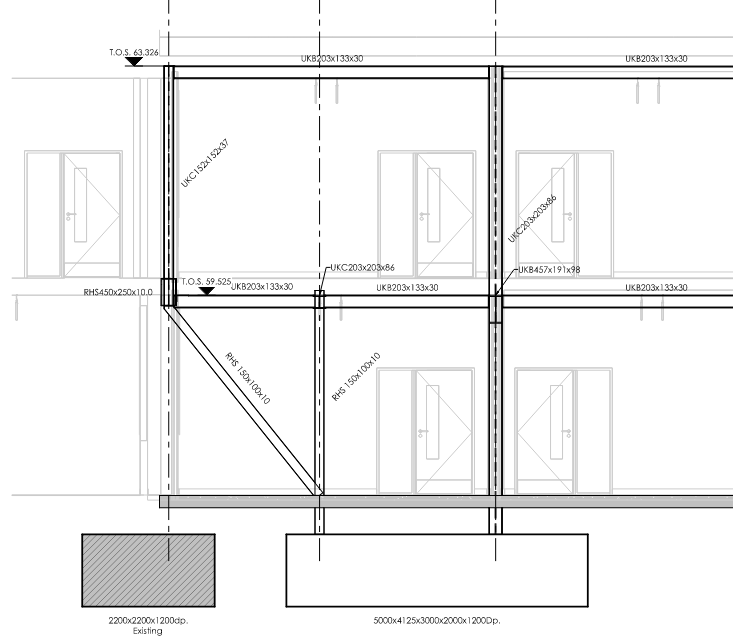
To address this, two solutions were implemented. The primary method involved extending the existing pad foundations using dowels. Steel dowels were drilled and fixed into the existing concrete to enable new concrete extensions to act compositely, increasing load-bearing capacity. In one location where this approach was insufficient, a slanted column was introduced on to a new pad foundation was designed to resist the horizontal forces.
Due to the variable ground conditions on the site ground improvement in the form of vibro stone columns was carried out. By implementing these two solutions we were able to avoid the need for ground improvement works adjacent to the existing building, which was not permitted within two metres of the existing building, while still providing a safe and efficient load path.
The project demonstrates the importance of careful structural integration, foundation assessment, and adaptive engineering solutions.

Project Team
Edgar Taylor Construction