Project Description
Designing new classrooms for Marlborough School
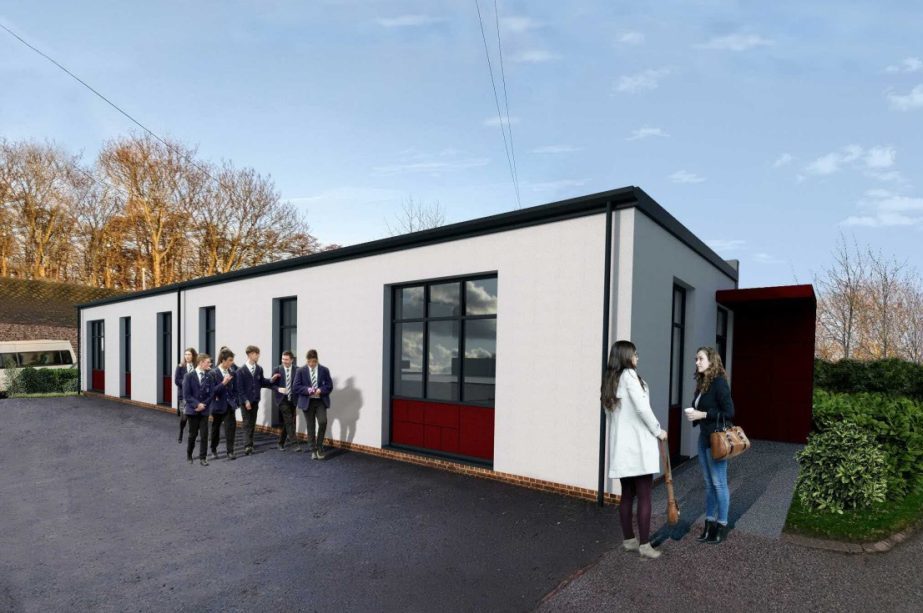
Marlborough School is a state secondary school that required a new, purpose-built facility to accommodate six new modern classrooms. The project involved the construction of a new teaching block designed to be robust, adaptable, and suitable for a demanding educational environment.
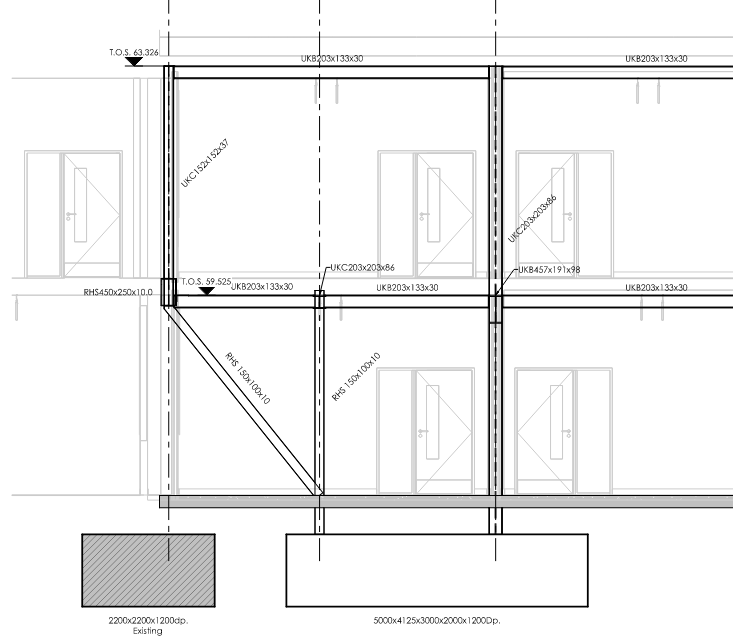
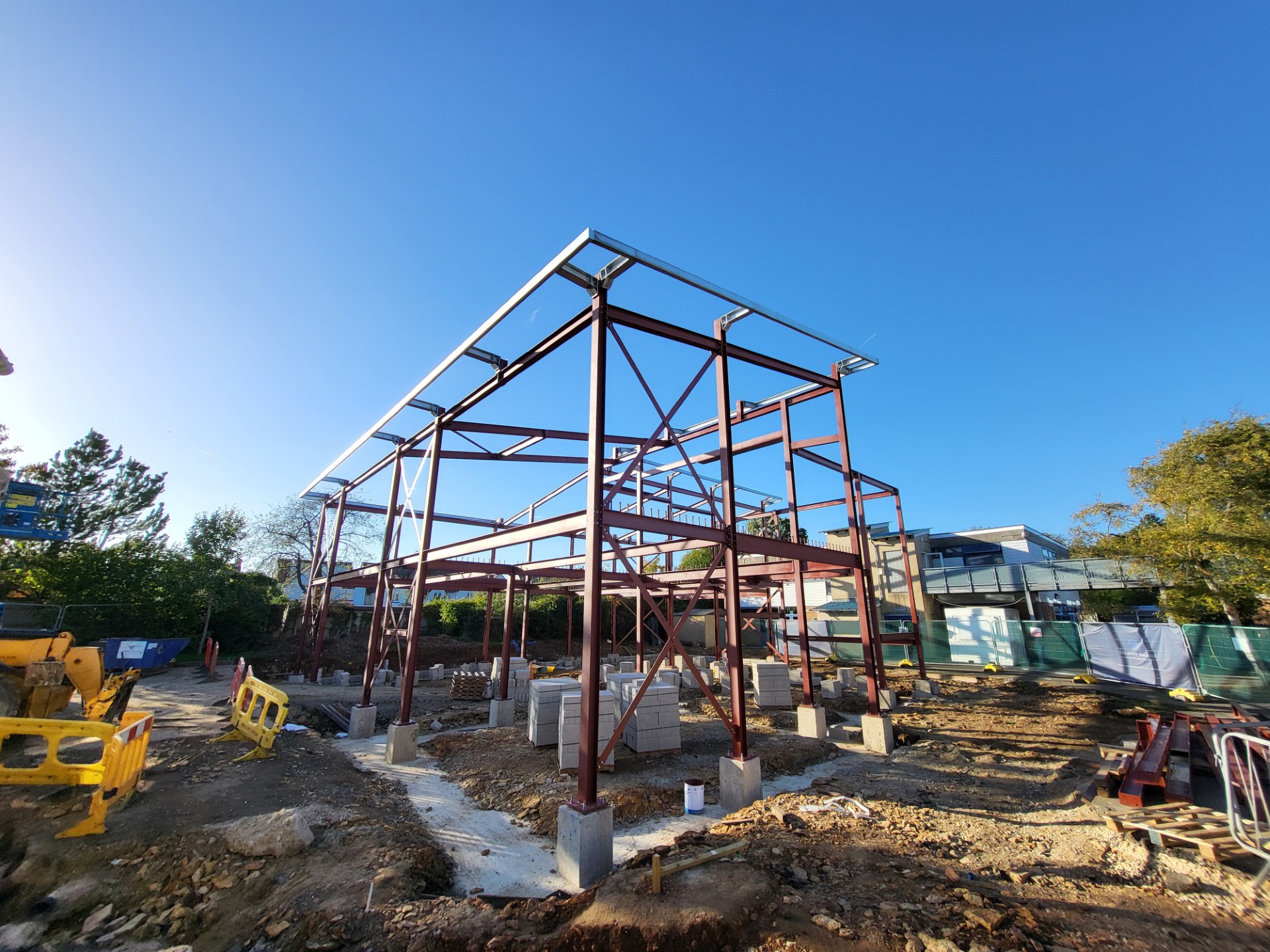
A steel frame building was selected as the primary structural system. Steel frames are commonly used in school projects due to their strength-to-weight ratio, speed of erection, and inherent flexibility. This flexibility allows for longer spans and no internal load-bearing walls, which is particularly beneficial for science laboratories where layouts may change over time as teaching requirements evolve. The reduced number of columns also improves circulation and maximises usable teaching space.
The floors were constructed using composite steel decking, rather than traditional pre-cast concrete planks. Composite decks consist of profiled steel decking that acts as permanent formwork for an in-situ concrete slab. Once cured, the steel and concrete work together structurally. This system provides several engineering advantages: it is lighter than pre-cast alternatives, reduces foundation loads, and allows services such as pipework and cabling to be easily coordinated within the floor zone. From a construction perspective, composite decking also speeds up the build programme and offers greater tolerance for late design changes.
Overall, the new building itself was relatively straightforward, with no unusual structural constraints. However, complexity arose during alterations to the existing changing rooms. Although site investigation data had been reviewed, the underlying rock was encountered at a much higher level than anticipated when excavation works began. The original foundation design assumed deeper rock levels and included a void beneath a beam-and-block floor to accommodate shrinkable soils, allowing for potential ground heave and settlement.
Once the rock was found to be significantly higher, soil movement was no longer the governing factor. Instead, the void beneath the floor was required purely for ventilation, to prevent moisture build-up and protect the floor structure from damp-related issues. This required a late-stage redesign of the foundation and sub-floor details, ensuring sufficient airflow while working within the reduced available depth.
The project demonstrates key structural engineering principles in practice: adapting designs to real ground conditions, selecting appropriate structural systems for flexibility and longevity, and ensuring that changes on site are resolved safely and efficiently without compromising performance.